
Not Sure How to Move Forward with Divorce?
Understand your process and financial options before making decisions that can be difficult—or costly—to undo.
✔ Understand your divorce process options
✔ Know which financial decisions matter most
✔ Avoid costly mistakes before you commit
15 minute call—no pressure, no commitment.
Divorce Pathway Decision Guide
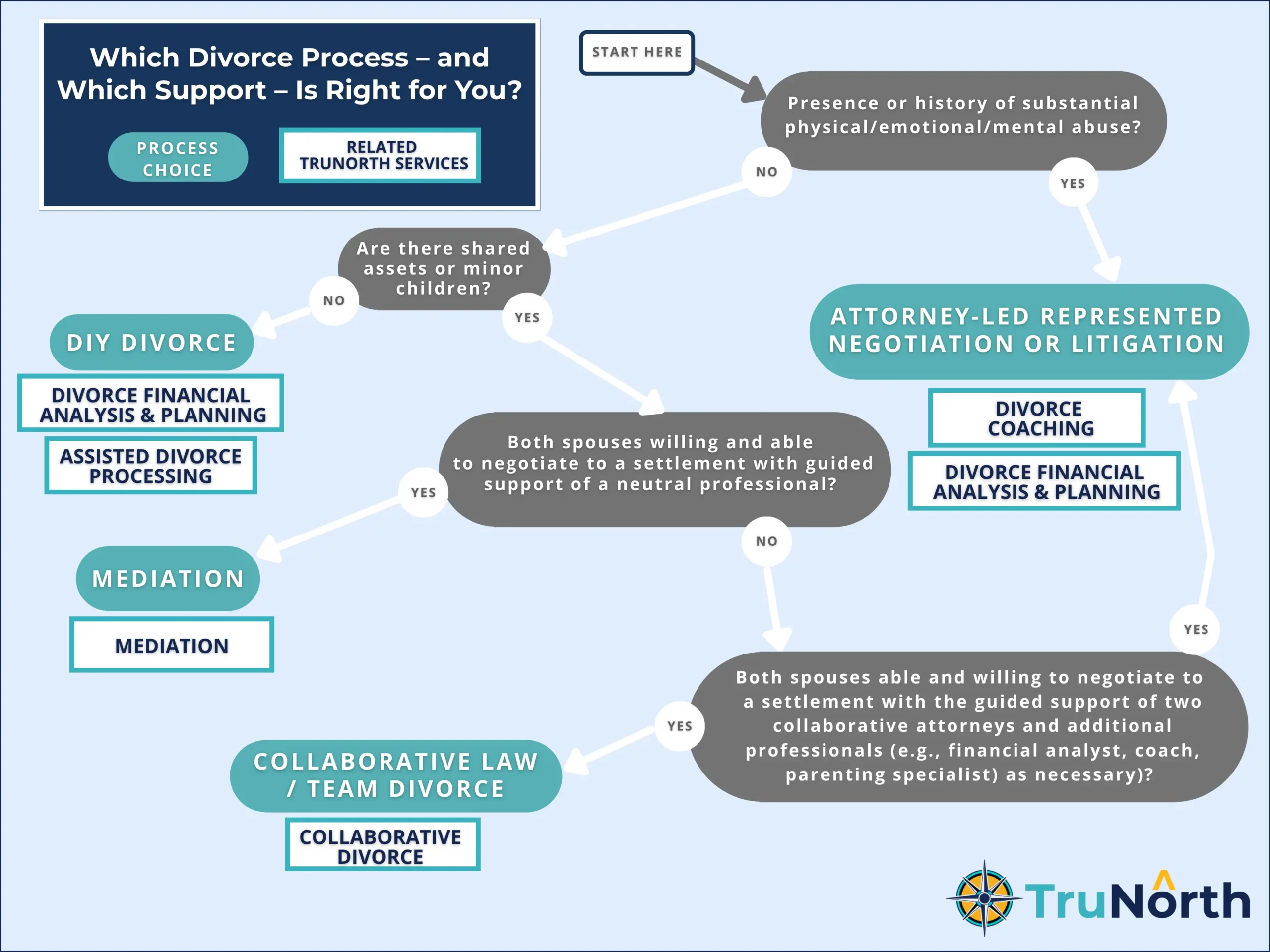
Divorce isn’t one-size-fits-all — the process you choose can shape everything from your financial outcome to your stress level. This chart will help you understand your options and identify the path that best fits your situation. Whether you’re considering doing it yourself, working with a mediator, building a collaborative team, or needing legal protection, you’ll also see which TruNorth services can support you along the way.
Use this tool as a starting point to move forward with greater clarity, confidence, and the right kind of help.
Divorce Pathway Decision Guide
View Divorce Coaching
Before You Make Financial Decisions, Know What Matters
Choosing how to divorce is only part of the picture. The decisions you make about your home, support, retirement accounts, taxes, debt, and other assets can shape your financial life long after the divorce is over.
A settlement that looks fair on paper may not work the same way in real life. Understanding the financial trade-offs before you agree to anything can help you avoid expensive mistakes and make decisions with greater confidence.
Not ready for personalized financial guidance? Start with our free resources.
Divorce isn’t something you plan for—which makes it hard to know where to begin when the time comes. Maybe you’re still weighing your options, trying to understand the different divorce processes, or wondering what you need to know financially before making important decisions.
You don’t need to have it all figured out. This page was created to help you explore your choices, understand the types of support available, and identify the financial issues that may affect your future—from the house and support to retirement accounts, taxes, debt, and other assets.
The goal is to help you understand both how to move through divorce and what to consider before agreeing to a financial settlement. If anything is still unclear after going through the material, we can set up a short call to talk it through and explore your best next steps together.
Frequently Asked Questions
Where do I start?
Start by getting informed. Before choosing a divorce process—or making decisions about your house, support, retirement accounts or other assets—understand the choices in front of you.
Some people need mediation, some need financial analysis or planning, some need legal advice, and some need a combination. You don’t have to know which one you need before you begin. The goal is to understand your situation well enough to choose the right kind of help.
How do I know what kind of divorce process is right for me?
That’s one of the most common (and important) questions people ask. The process you choose can affect your finances, your parenting relationship, and your peace of mind — both now and long after the divorce is final.
Here’s a quick overview:
Divorce Coaching
One-on-one support to help you navigate the emotional, practical, and strategic decisions during divorce.
✅ Helpful when: You’re feeling overwhelmed, uncertain about how to move forward, or want help preparing for conversations, negotiations, or legal steps.
👉 Learn more about Divorce Coaching
Mediation
A structured process where a neutral third party helps you and your spouse reach agreement on parenting, property, and finances—outside of court.
✅ Helpful when: You’re both willing to cooperate, want to stay out of court, and need help working through the details.
👉 Explore Our Mediation Services
Collaborative Divorce
A team-based approach where each spouse hires their own collaborative attorney and works with other professionals (like financial or parenting experts) to reach an agreement without litigation.
✅ Helpful when: You need legal support but want a respectful, non-adversarial process with shared goals.
👉 See How We Support Collaborative Divorce
Attorney-Led Negotiation and/or Litigation
Each spouse hires their own attorney to negotiate a settlement. If an agreement can’t be reached, the case may move to court (litigation).
✅ Helpful when: You’re not comfortable negotiating directly, want legal protection, and need support resolving complex or contested issues.
👉 Let us help you with coaching or divorce financial analysis and planning to most effectively utilize this option. We also support attorneys in negotiations or litigation.
DIY Divorce (Pro Se Divorce)
You and your spouse complete the entire divorce process on your own, without attorneys or professional guidance.
✅ Best when: You agree on all terms, have uncomplicated finances, and may also be comfortable preparing and filing your own legal documents.
💡 Even in a simple divorce, many couples choose our low-cost TruNorth Divorce DIY Dock & File® package to avoid mistakes, get expert review, and ensure documents are prepared and filed correctly.
Still not sure? That’s okay, schedule your consultation and let us know you’re unsure of which option is best for you but that you are also ready to choose a process and professionals. We’ll help you compare your options and choose what’s right for your situation — not just what feels urgent.
Do I need a lawyer first?
You don’t need a lawyer to get started and you may not even need one at all. Many people work with us first to get clarity, organize their financial information, and evaluate process options. Others come to us after trying to negotiate with attorneys but need help understanding the numbers or finding common ground.
And if you are doing a DIY divorce, we offer a service called TruNorth Divorce DIY Dock & File™, which includes professional consulting, document preparation, and court filing support for self-represented (pro se) couples.
We also work alongside attorneys in Collaborative and litigated cases to provide financial expertise and strategy support.
What if my spouse and I aren’t on the same page?
That’s extremely common. You don’t need to be in full agreement to begin. In fact, our role is often to help you both get clear on your priorities and understand your options.
You can even start working with us individually and decide later whether a joint process like mediation or Collaborative Divorce is appropriate.
What financial issues should I understand before making decisions?
Divorce involves more than dividing assets. Decisions about the house, retirement accounts, support, taxes, debt, insurance and other financial issues can interact in ways that aren’t always obvious.
Before agreeing to anything, it helps to understand what you own and owe, what your post-divorce cash flow may look like, and how different settlement choices could affect you both now and in the future.
What makes a good financial settlement in divorce?
A good settlement isn’t necessarily one that divides every asset equally. Different assets can have different tax consequences, risks, income potential and long-term value. And a settlement that looks equal on paper may leave the two spouses in very different financial positions.
A good settlement should consider the whole financial picture—including assets and debts, income and expenses, support, taxes, retirement and each person’s ability to move forward after divorce.
How do I know whether I need divorce financial planning?
Financial planning can be especially helpful when you’re unsure whether you can afford to keep the house, how support may affect your cash flow, how retirement assets should be divided, or whether different settlement options will actually work for you over time.
It can also help when the finances aren’t particularly complicated but you simply want to understand the consequences before making decisions you may not be able to undo.
How much do your services cost?
It depends on your situation and the level of support you need. Some services are flat-fee (like mediation or DIY Dock & File), while others are hourly or bundled in packages.
- Divorce Financial Analysis and Planning will prepare you to negotiate with your spouse, work with a mediator, or attorneys.
-
Mediation is usually a flat fee based on the complexity of your finances and parenting needs.
-
Collaborative Divorce includes other professionals and typically costs more than mediation, but less than full litigation.
-
DIY Dock & File is our most affordable option for aligned couples who just want guidance + paperwork + filing.
We’ll walk you through the options and help you understand what’s most appropriate and cost-effective for your goals.
Do you have payment plans?
Yes. We typically invoice in installments over the course of our work together. We accept credit card payments, and eligible clients may also have the option to use Pay Later through our payment processor, allowing the cost to be spread over additional payments over time. Pay Later availability and terms are determined by the payment provider.
What happens during a consultation?