Divorce is Not for Wimps

Strap in—it’s going to be a rough ride.

The relationship you have with your spouse is likely the most important connection in your adult life. At one time, not long ago, you were in love and could not imagine a life without them. You may have had children together, even grandchildren! But something shifted and now here you are contemplating or in the midst of a divorce. Hold on, because divorce is not for sissies.

Whether you initiated the split, or your spouse did, whether it was sudden or has been years in the making, this is among the most traumatic and life-changing events you’ll ever experience. Divorce permeates all aspects of our lives: emotionally, psychologically, financially, socially, and physically. I see the impact of separation and divorce on people’s lives every day in my practice as a divorce mediator, financial advocate, and coach.

I know it, too, because I’ve been there. Growing up, I was a child of divorce, and it fundamentally impacted my life. My mom didn’t get the emotional, legal, or financial support she needed after my father left her while pregnant with her fourth child. She never really recovered and that was terribly sad. As for me, it certainly dampened my remaining childhood years and, in some ways, still has adverse effects.

I also divorced the father of my own three young children many years ago now and went through the incredibly painful and expensive process of a litigated divorce. All I knew back then was to pick up the phone and call an attorney. What ensued were years of court battles and what today would amount to about $100,000 in attorney’s fees. I knew there had to be a better way.

Today, I am fully dedicated to assisting individuals and couples through the divorce process in a way that leaves them as unscathed as possible, so that they and their children can move on to build a better future without long-lasting trauma. Be clear, though, divorce is not for sissies and you will need support. 

Financially, you may wonder how you’ll ever be able to support yourself and your children, how you’ll be able to afford to retire or live the life you’ve worked so hard for. Will you be able to keep your home? Will you have to get a better-paying job? 

As a mom or dad, you will have to adjust to the reality that your children will be sharing their time with the other parent and, potentially, a new partner. I cried my eyes out the first Thanksgiving that my children spent with the father and his family five hours away. As prepared as I thought I was, I was still alone without the ones I loved the most.

You will worry what effect all of this will have on your children, whether young or adult. Don’t kid yourself that the kids seem to be just fine. They aren’t. They need you to be a full-time parent if they are young and empathetic to their changing lives no matter what the age. 

Socially, you will lose many friends that you shared as a couple. Some of your friends may treat you differently, be wary of your stories and woes, or feeling awkward when you’re the only single person in a group of couples. As for intimate relationships, will you ever be able to love someone again, and how about dating, how is that going to work?  

Emotionally and psychologically, you aren’t going to be yourself for a while. You may feel confused and overwhelmed, question yourself about even the smallest things, be less productive at work or at home, occasionally or often be emotionally volatile, anxious, and/or depressed.

Your health may suffer, too. You may eat or drink too much, skip routine, preventative care, not get enough exercise, and have difficulty sleeping.

All of this is completely normal. Divorce is not for the uninformed and it won’t go away if you put your head in the sand. The question is not whether you need support but what kind and from which sources. It will not all be okay if you just hire the right lawyer.

I am here to tell you: divorce is not for sissies! So, get informed, build your support team, and keep reading this blog—its mission is to give you the information you need and show you the way to making the right decisions for a brighter future for you and the ones you love.

4 Things to Do BEFORE You Divorce

before you divorce

If you’re reading this, then obviously you’re thinking about ending your marriage. Before you initiate your divorce, I’m going to ask you to take a few steps to ensure the best outcome for you should you decide to move forward. This is not a decision to be taken lightly and a little preparation can go a long way.

The reality for lots of couples that have invested in each other for many years is that if you’re going to end the relationship, you now have to stop thinking emotionally and start thinking financially.

#1 Evaluate What You Really Know About Your Finances

If your answer is anything but “Oh, I handle all our finances, I know exactly where we are,” then you have work to do. If you have been out of touch with your family finances for more than five years, don’t even try to get caught up. Get yourself to a CDFA® (Certified Divorce Financial Analyst) ASAP! You can find one in your area by going to the Institute for Divorce Financial Analysts. Do this BEFORE you tell your spouse you want a divorce. Your CDFA® will help you do a little digging to get some information before the information mysteriously disappears. They’ll also help you see what your financial life after divorce might look like.

#2 Gather Documents Before your Divorce Starts

This is the one thing you can do to save yourself a ton of money in the divorce process. Anything you can gather before you meet with either an attorney, a mediator, or a CDFA® will reduce the amount you ultimately have to spend out-of-pocket. Here a quick list of must-have documents.

  • 3 years of tax returns
  • 6 months of bank statements on all accounts
  • 6 months of statements on each of your marital and separate investment accounts including 401k, deferred
  • compensation, ESPP, ESOP, 403b, 529, IRA, etc. If you are baffled by those different account types or you’re not
  • even sure if your spouse has a retirement plan, get to a CDFA® now!
  • Most recent 4 paystubs
  • Most recent mortgage statement on any properties owned
  • Copies of all insurance policies and annuities (the policies themselves as well as statements)
  • VIN numbers and mileage on vehicles owned
  • Most recent statements on debts, credit cards, car loans, etc.
  • Details of any business interests, e.g. S Corps, LLC’s, and partnerships

#3 Get Organized

Once you’ve gathered all the data, find a way to keep it all organized. Some people create a 3-ring binder with tables for each section, others put all their documents in a protected electronic environment like Dropbox, iCloud, or Google Drive. This is best when you need quick and easy access in a mobile format. Again, this will save you a lot of money down the road.

#4 Research Alternative Divorce Processes

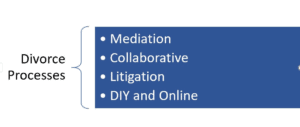
There are several ways to get a divorce, each with its own pros and cons. Which method you choose will be largely dictated by the relationship between you and your spouse. If you are afraid for your or your children’s safety for any reason at all of it your spouse is denying you access to enough cash to survive, get a lawyer.

If you believe you and your spouse will be able to rationally discuss and negotiate the details of your divorce and be fair and honest, you might consider a do-it-yourself divorce or use an internet service to guide you. Beware: just because you and your spouse are getting along today doesn’t mean it will always be this way.

Your county’s divorce website will most likely give you an overview of the process and forms you’ll need if you going the DIY approach. There are lots of cheap internet services, too, that can produce divorce forms for your jurisdiction, but not all counties accept their forms as-is. These cheaper alternatives may seem attractive upfront but the money it may take to correct any mistakes you make along the way could cost you thousands of dollars.

If your financial situation is a bit more complex, e.g., there’s a pension involved or one party is self-employed, or the idea
of DIY frightens you, then you should consider using a CDFA® as a financial neutral as part of a collaborative team
or as a mediator to help you craft a fair settlement. Your CDFA® may also be able to get your legal documents
prepared for you, too. When couples go this route, they are more likely to remain friends—it’s a respectful, honest way
to go through the process and saves both parties significant money by not having to pay expensive lawyers.

As a last resort, if one or both parties can’t manage to cooperate at any level and seem determined to go to war, then hiring attorneys may be your only option. Unfortunately, you’ll need to say goodbye to about $15,000 per spouse, at a minimum. A little preparation before you move forward with a divorce can go a long way towards reducing the cost of your divorce and creating a fair settlement. Wishing you a gentle divorce and a bright future!

The divorce process can be scary and overwhelming. Starting with a plan and professionals that you trust to guide you through the process can be key in making sure you’re ready for your future. If you’re thinking about divorce schedule your complimentary divorce strategy session where we’ll explore your options and connect you with any resources you might need.

Do I Need a Lawyer for My Divorce?

Divorce is a life changing decision full of emotional and financial disruption. So when it comes to how you want to handle the ins and outs of asset division and custody arrangements, it’s important to weigh your personal circumstances carefully before committing to working with a family divorce mediator or a family lawyer.

While it’s true that most divorces don’t need to go to court and that divorce mediation has become a tried-and-true practice for modern divorce, sometimes hiring a family lawyer is a smart call.

1.   Your Divorce is Contested

Divorce is often a sticky topic. The emotionally charged aspect of divorce can cloud judgment and drag out the process. These are the types of divorces that need court intervention and are usually the most difficult ones.

If your divorce is contested, you, your soon-to-be-ex, or both of you have differences that make it impossible to reach a divorce agreement on your own. Generally, settlement negotiations try to find middle ground and carve out an equal division of shared assets. When a settlement agreement can’t be reached through a collaborative private negotiation, it’s settled in divorce court.

2.  Emotional Hang-ups and Attachments to Possessions

A divorce might seem amicable and uncontested when the paperwork is filed and in the initial talking phases, but emotions can really derail the process. Sometimes, this can involve an irrational attachment to shared possessions.

While both parties may believe that the best possible course of action for the future is divorce, this doesn’t make the act of divorce any easier. Emotions can often steamroll logic. Divorces that drag on become expensive. If you find that your emotions are overtaking reason, it’s probably best to work with a family lawyer. 

3.  Custody Disputes

Divorce is often a sticky topic. The emotionally charged aspect of divorce can cloud judgment and drag out the process. These are the types of divorces that need court intervention and are usually the most difficult ones.

If your divorce is contested, you, your soon-to-be-ex, or both of you have differences that make it impossible to reach a divorce agreement on your own. Generally, settlement negotiations try to find middle ground and carve out an equal division of shared assets. When a settlement agreement can’t be reached through a collaborative private negotiation, it’s settled in divorce court. 

4.   When Mediation is the Right Choice

Family divorce mediation is a great choice for divorcing couples who are able to manage and sort out the emotions surrounding their divorce. If you are filing an uncontested divorce, then mediation can save you stress, time, and money.

Divorce mediators are knowledgeable in family law, and many professionals bring valuable legal and financial expertise to the negotiating table. Be sure to educate yourself on the mediation process and familiarize yourself with the services mediators offer. A divorce mediator can be a lawyer, a Certified Divorce Financial Analyst (CDFA®) or other appropriately trained individual. Be sure you understand the differences in your alternatives and which would be best suited for your case. The decision of choosing a family lawyer or a divorce mediator is a personal one. Asking the right questions can help you set reasonable expectations and make a decision on whether or not a mediator will meet your professional needs.

Is mediation right for you? Visit our website to schedule a free divorce strategy session online with TruNorth Divorce Solutions.


Get A free Consultation

484.321.6990

hello@trunorthdivorce.com

Why You Need a Divorce Mediator in Maryland

Most of us feel overwhelmed and rather clueless about which direction to take once we conclude we’re going to get a divorce. Traditionally, the first move had been to call a lawyer but you should pause, take a breath, and then reach out to the right professional to get you going in the proper direction for you and your family.

 Other than a DIY divorce (unadvisable unless you have neither assets nor children), mediation is the least expensive and fastest way to get your divorce. A divorce negotiated through mediation will also help you preserve a civil relationship with your spouse, especially important if you have children, and always important for your self-esteem. If you live in Maryland (or any other state) you should first seek the help of a divorce mediator in Maryland to discuss whether this is a viable option for you. 

The Best Mediator for Your Maryland Divorce

Divorce impacts us emotionally and financially and must be processed within the confines of the law. It’s generally not a good idea to go through this process alone, especially when there are qualified professionals who can help guide you through the process and address each of the facets of divorce, not just legal. 

If you choose a divorce mediator in Maryland, identify an experienced moderator who has not only knowledge of Maryland divorce laws and procedures but also training in divorce financial and emotional issues. The mediators at TruNorth Divorce take a holistic perspective on divorce and are dually certified as divorce financial analysts and divorce coaches. They have also been extensively trained in divorce mediation, including how to process your divorce legally. Don’t expect your divorce lawyer-mediator to be  skilled in all of these areas–the reality is that attorneys aren’t trained in anything besides law and often don’t know what they don’t know. Consider adding in a Certified Divorce Financial Analyst CDFA® and divorce coach to your team if you go the lawyer route.

Reach out to a divorce mediator in Maryland if you want a kinder, smarter, and more affordable divorce. If you’re on the fence and you have a list of concerns related to your divorce, don’t hesitate to Schedule a Free Strategy Session to go over your options. 


Get A free Consultation

484.321.6990

hello@trunorthdivorce.com

An Overview of Divorce in Maryland


Most “How to Get Divorced” articles take a rather narrow view, i.e., the legal process. Obviously, these articles are typically written by lawyers. 😉 

How to get divorced can be a multi-faceted, complicated, entangled, frustrating, non-linear, jumble of a messy process. Not surprising, given that there are two spouses, years of history, hot emotions, finances, children, a home, secrets and lies, and hidden agendas involved.

Given all this, though, let me try to keep this “how to get divorced in Maryland” piece as simple as possible for this medium (please contact us for more detail.) Here are what we consider to be three essential components.

#1: Financially Prepare and Protect Yourself Before You Start the Divorce

  • Open a separate checking and credit card account at a new bank
  • Check your credit report and score and then periodically track
  • Establish private communication, e.g., P.O. box, email account
  • Gather and copy financial and legal documents—tax returns, statements for loans, bank and retirement accounts, investments, wills, trusts, deeds, car registrations, insurance policies—and store them outside of the marital home

#2: Talk to Professionals

Most think to first call a lawyer after they talk to a few of their friends and family members. Let me suggest otherwise. Friends and Cousin Amy are great for support but they aren’t likely stellar for advice on how to handle one of the most important and costly events of your life. While well-intentioned, their cases and knowledge of others’ situations are different than yours and you will need the advice of a professional for accurate advice.

You’re best first stop is not with a lawyer but with a far more neutral and resourceful individual: a reputable divorce coach. She or he can help you assess your situation and choose the best path forward and how to execute. They can also help you with setting objectives for how you want to handle the divorce on a personal level, i.e., how to be your “best self.” They can help you better work with a lawyer or mediator, saving you money and significant angst. They are more than anything, the quarterback on your divorce team who can help you assemble the right individuals for the jobs you’ll need to get done.

Lawyers, of course, are a critical component for their knowledge of the legal process. They will often unnecessarily steer you, though, to costly litigation, without regard for what will be best for you and your spouse. Many lawyers are now moving into mediation as its become more popular with divorcing couples, but keep in mind that lawyers aren’t necessarily the best choice for mediation. They are also not equipped to handle the emotional, practical, or complex financial issues of divorce, so make sure you talk to more than just a lawyer early on in the divorce process.

Mediators are a good information source as you consider mediation as a divorce process. Other professionals to consider are a Certified Divorce Financial Analyst® (CDFA®) to discuss optimal or creative financial settlement options, or a therapist who may be able to provide extended emotional support.

# 3: Familiarize Yourself with MD Divorce Law and County Procedures

a. Legal Separation

In Maryland, there is no legal separation and as of fall 2023 there is no “limited divorce” which was, essentially, a legal separation. Even without legal recognition of a separation you can still create a legally binding separation agreement that covers such things as child support, spousal support, joint bills, parenting plan, health insurance, loans and other debts, etc.

b. Residency

If the ground for divorce occurred in Maryland, you need only be currently living in Maryland at the time you file for divorce. If the grounds for divorce occurred outside Maryland, you or your spouse must have lived in Maryland for at least six months before filing your divorce complaint.

c. Types of Divorce, Waiting Periods, and Filings

In Maryland, most divorces are no-fault divorces and you can get a divorce without a waiting period if your divorce is mutually consented. A no-fault divorce may also be based on a one year separation.

Additionally, there are at fault divorces which may be treated differently when it comes to awarding alimony and sometimes custody if the fault ground negatively affects the children. At-fault grounds include adultery, actual desertion, and constructive desertion (typically this is cruelty). At-fault divorces will not be granted if the plaintiff is also determined to be at-fault.

Divorce filings are handled by county court. Filing can take place where either of the spouses resides. Each county has its own procedures and fees and should be researched prior to filing.

d. Support, Settlement and Custody Agreements

It’s important to note that if you have financial and custody issues to work out before the divorce is finalized you must do so before the waiting period is over or the decisions will be deferred to the court. The court will look to the filing spouse for their preferences.

If you both hire attorneys and litigate in the courts, you will likely spend a minimum of $30,000 – $40,000. Mediation can reduce fees to less than $10,000. Courts will appoint legal representation for those in need or you can negotiate the financial and custody terms yourselves.

So, that, in a nutshell is “How to Get a Divorce in Maryland.” It’s a bit more nuanced than this as, stated earlier, divorce can be a multi-faceted, complicated, entangled, frustrating, non-linear, jumble of a messy process. For more information on Maryland divorce from a legal perpective, you can go here.

Call or request a consultation if you want more info. 

Get A free Consultation

484.321.6990

hello@trunorthdivorce.com